What counts as a Sub-Zero Designer or Integrated unit?
These are the fully flush, panel-ready models that disappear into cabinetry: IT tall combos, IC and IT columns, and ID drawer units, sold as the Integrated line and later renamed Designer. Tall and column versions ran through 2022. If your refrigerator wears your kitchen’s cabinet fronts and sits dead flush, it is one of these.
Why does a column take longer to service than a built-in?
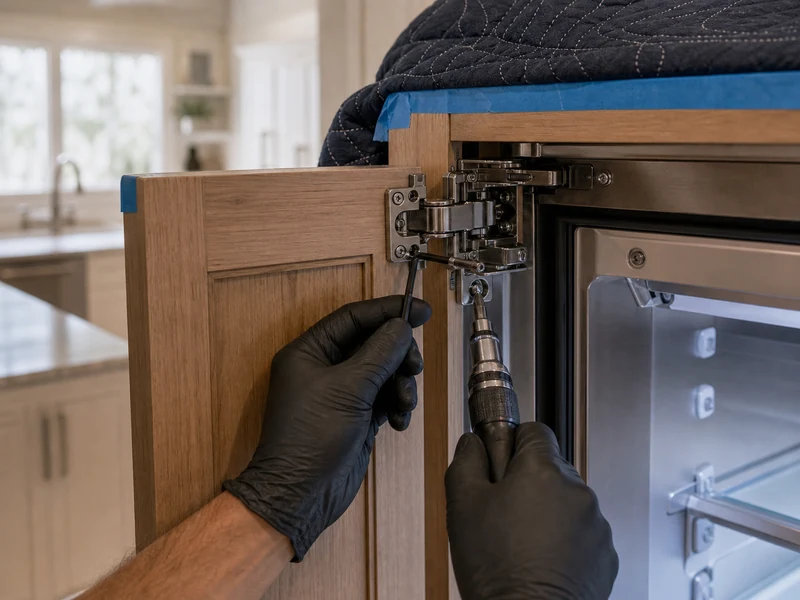
The flush install is the reason. The custom panel, hinges, and surrounding cabinetry all have to come apart and go back precisely, and a column often pairs with a matching freezer or wine unit that shares trim. We budget for hinge and panel recalibration on every Designer visit so the doors close flush and even afterward.
My integrated ice maker stopped — same hard-water story?
Largely, yes. Integrated ice makers run the same St. Johns water, 14 to 28 grains per gallon, so scale at the inlet valve and fill path is the usual cause. The wrinkle is access: reaching the water connections behind a flush panel takes more disassembly, which is built into the quote. The descale-and-rebuild logic is the same.
I got a water-filter version error after a filter change — what is that?
Sub-Zero’s integrated units can reject a cartridge they read as the wrong version, throwing a filter error even when ice and water seem fine. It usually traces to a non-matching filter or a reset the system did not accept. We confirm the correct cartridge for your exact model and clear the error properly during the visit.
Do you work on the newest DET and DEC Designer refrigerators?
We do out-of-warranty repairs and maintenance on them, but the 2022-and-newer DET tall and DEC column models usually still carry the factory warranty. Those claims belong with Sub-Zero Factory Certified Service, and we will confirm your serial’s status before any work so you are not paying for covered repairs.
Do the doors stop sitting flush after a column is serviced?
They should not, if the hinges are recalibrated. A flush Designer install relies on the panel sitting dead even with the surrounding cabinetry, and any repair that opens the door or moves the unit can shift that alignment. We treat hinge and panel recalibration as part of the job, not an extra, so the front lines up the way it did before we arrived.
An ID drawer unit in my island will not stay cold — what fails on those?
Drawer units fail at the slide and seal more than the cooling. A drawer that no longer pulls fully shut lets warm air in, and the gasket on a heavily used island drawer wears faster than a door seal. We check the slide, the seal, and the fill or defrost behind it, then verify the drawer holds temperature once it closes square again.
Why does a paired column run cost more to service than a single unit?
Because the cabinetry is shared. When a refrigerator and freezer column sit side by side under one continuous run of panels and trim, reaching the fault on one often means protecting and partly freeing the other. We stage that access so the neighboring unit and the shared trim are not disturbed, which adds planned time the single-column job does not carry.
Are Designer parts harder to get than Classic BI parts?
Generally no — the IT, IC, and ID line is newer than most Classic BI units, so boards, valves, and ice-maker components are well supported. The catch is the same revision discipline: the serial pins the exact part. Where a Designer service runs longer than a built-in, it is the flush access and panel recalibration adding time, not a parts hunt.
Will moving an integrated column for service mark or damage my cabinetry?
Not when the access is planned. A flush install means the panel, hinges, and surrounding trim are fitted to tight tolerances, so we protect the adjoining cabinetry, free only what the repair needs, and recalibrate the hinges on reassembly. The doors should sit exactly as flush afterward as before. Rushing that step is how careless work scratches a panel — which is why we budget the recalibration time.